“Fresh” on a dog-food package does not tell you whether the food is cooked. Before switching, check the processing method, storage instructions and whether the diet fits your dog’s needs.
In its October 23 report on new fresh-food lines, AVMA News says the Association of American Feed Control Officials has no official definition for the term. It can be used inconsistently and may be applied to raw diets.
Cooked and raw are different choices
The FDA’s food-handling advice says raw pet food is more likely than processed food to contain harmful bacteria, including Salmonella and Listeria monocytogenes. The risk extends to pets and people who handle the food. FDA recommends avoiding raw diets as the best way to prevent these particular infections.
Refrigerated does not automatically mean raw. AVMA reports that Hill’s Single Protein Dog Food Rolls are steam cooked inside their sealed packaging. Royal Canin describes its Fresh Veterinary Diets as cooked, individually frozen and treated with high-pressure processing. Those are the companies’ descriptions of processing, not a guarantee that a meal can never become contaminated.
If a label says only “fresh,” ask the manufacturer how it is processed and follow its handling instructions. Do not assume that the word alone establishes a pathogen-reduction step or makes one food nutritionally better than another.
Keep food handling separate from marketing
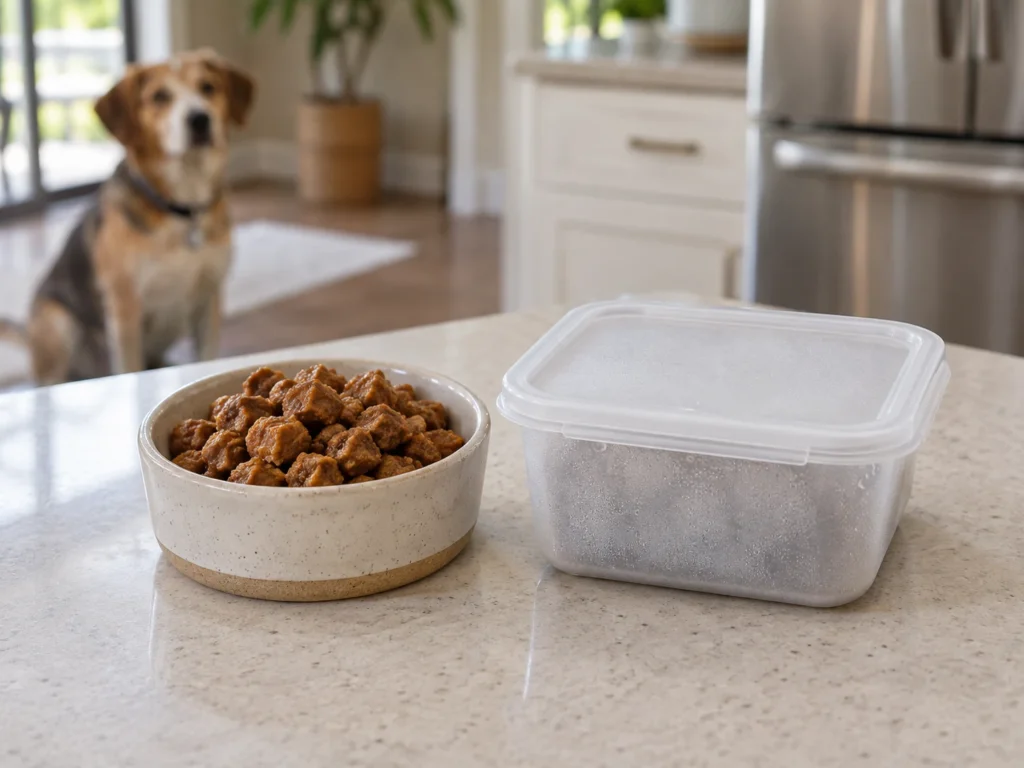
FDA recommends washing your hands with soap and hot water for at least 20 seconds before and after handling pet food. Wash bowls and scoops after each use, and use a separate utensil to scoop the food.
For unused canned or pouched food, FDA says to refrigerate promptly in a covered container or throw it away. Keep the refrigerator at 40°F or below. For a refrigerated or frozen fresh product, follow its own label for storage, thawing and time after opening. A shelf-life figure for an unopened package does not establish how long an opened meal keeps.
Ask before changing a therapeutic diet
A food’s processing and its nutritional suitability are separate questions. AVMA’s report cites a review recommending veterinary guidance for a move to fresh food. If your dog already follows a prescribed diet, ask the prescribing veterinarian before replacing it with a different product.
Take the exact package or product information to that conversation. The useful questions are how it is processed, how to store it, and whether it meets your dog’s dietary needs.